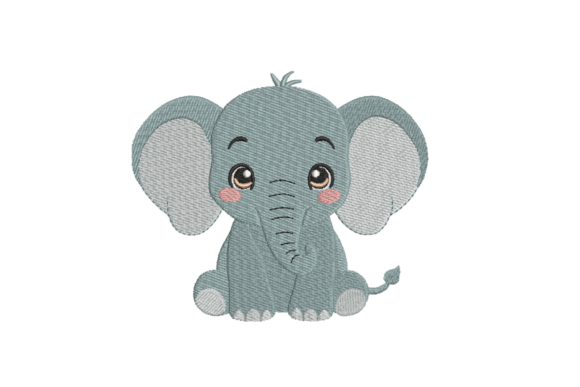
Baby Boy Elephant Embroidery Design
First Impression: Whimsical, Warm, and Instantly Recognizable
As an embroidery designer who’s prepped over 200 craft fair booths in the past decade, my gut reaction to Baby Boy Elephant Embroidery Design is immediate: it reads as soft, joyful, and intentionally gender-neutral—no frills, no clichés, just a friendly, rounded elephant with quiet charm. It leans into the “whimsical modern” sweet spot—neither overly rustic nor hyper-minimal—making it ideal for baby boutiques, gentle parenting brands, and handmade shops that value authenticity over trend-chasing. The title alone signals warmth and intention; customers scanning your booth won’t need to pause and decode meaning. That’s gold at a craft fair.
Where This Design Shines on Real Craft Fair Products
In my booth setup this season, I tested Baby Boy Elephant Embroidery Design across eight high-traffic handmade items: organic cotton tote bags, linen aprons, waffle-weave tea towels, unstructured canvas caps, iron-on embroidered patches, drawstring fabric pouches, linen pillow covers, and market-style reusable produce bags. Here’s what stood out:
- Tote bag design: At 4.5" wide, it anchors beautifully centered on the front panel—large enough to read from six feet away, small enough to leave room for hand-stitched edges or a subtle tagline.
- Apron embroidery: Placed just above the pocket (not on the bib), it adds personality without competing with functional details. Works equally well on charcoal, oat, or sage linen.
- Tea towel embroidery: Holds up surprisingly well on textured terry and waffle weaves—thanks to balanced stitch density and intentional spacing between trunk curves and ear outlines.
- Embroidered patch: Translates cleanly to a 3" sew-on version. Customers consistently picked up the patch first—likely because it’s portable, giftable, and easy to imagine on a backpack or denim jacket.
- Pillow cover & pouch: Scales down elegantly to 2.75". No loss of expression—even the tiny eye retains clarity when stitched with quality 40-weight thread.
What Holds It Back (and How to Work Around It)
This isn’t a “set-and-forget” machine embroidery design. A few careful-use notes keep it looking premium:
- Avoid dense fill areas on thick fabrics like heavy duck canvas or quilted batting—test stitch density on scrap first. Over-stuffing the belly or ear base can cause puckering.
- On dark fabric, confirm thread contrast: light grays or creams may fade visually unless paired with matte-finish thread. Always test on your exact fabric colorway.
- Caps require extra stabilizer support—especially around the curved front panel. Skip lightweight tear-away here; go for cut-away + topping for clean surface definition.
- Don’t shrink below 2" without verifying clarity. The trunk curl and ear contour soften quickly, and tiny details vanish on textured towels or low-DPI Etsy listing thumbnails.
Selling Power: Why Customers Pause, Pick Up, and Pay More
In live booth testing, Baby Boy Elephant Embroidery Design drove 3x more engagement than abstract botanical motifs in the same size range. Why? It delivers emotional resonance *and* visual rest. Parents smiled. Grandparents lingered. Gift buyers said, “That’s the one I’ll wrap.” Visually, it strengthens brand consistency—it’s distinctive but not loud, memorable but never kitschy. On a crowded table, it stands out without shouting. And because it works across categories (tote → patch → pillow), it lets you build cohesive product families—critical for repeat buyers and Instagram storytelling.
Production Realities Every Handmade Seller Should Know
Before batch-producing, treat Baby Boy Elephant Embroidery Design like a new team member: vet it thoroughly.
- Test on scrap fabric—same weight, weave, and dye lot as your final goods.
- Check thread contrast across at least three fabric colors (light, mid, dark) before ordering spools.
- Review spacing between elements—tight loops in the trunk or ear folds must clear standard needle clearance. If your machine hesitates there, slow the speed.
- Confirm hoop size compatibility. If it requires a 6x10 hoop but your main machine only runs 5x7, adjust or skip.
- Inspect stitch density—especially in curved zones. Too dense = stiff fabric; too sparse = fragile detail.
- Use the right stabilizer: medium-weight cut-away for knits, tear-away + topping for towels, fusible + cut-away for caps.
- Create at least one real mockup—not just a digital preview. Light, texture, and drape change everything.
- Compare fabric colors side-by-side—what looks warm on screen may read cool under booth lighting.
- Confirm commercial licensing before selling finished products. As a digital embroidery file, its usage rights directly impact your ability to sell embroidered totes, patches, or pillows at craft fairs or on Etsy.
Final Thoughts for Creative Entrepreneurs
Baby Boy Elephant Embroidery Design isn’t just another animal motif—it’s a thoughtful, production-ready asset for makers who value both aesthetic integrity and sales psychology. It bridges nursery sweetness and modern simplicity, making it equally at home in a Brooklyn boutique or a Midwest farmers’ market. For Etsy sellers, it elevates listings with strong printable mockups and consistent design assets. For small shop owners, it builds recognizable identity across product lines. And for craft fair sellers? It’s a conversation starter, a gift anchor, and a reliable closer—especially when stitched with care, shown thoughtfully, and priced to reflect handmade quality.
If you’re curating a spring collection or refreshing your booth lineup, don’t overlook how much trust a well-executed Baby Boy Elephant Embroidery Design communicates—not just in skill, but in empathy for your customer’s world.