Pumpkin Machine Embroidery
First Impression: Festive, Friendly, and Booth-Ready
As an embroidery designer who’s prepped over 200 craft fair booths—and sold thousands of handmade products—I opened Pumpkin Machine Embroidery expecting seasonal charm. What I found was something more: a design that feels instantly recognizable, warmly nostalgic, and commercially versatile. It reads as festive without being kitschy, handmade without looking amateur, and Thanksgiving-appropriate without leaning too hard on clichés. That balance is rare—and valuable at a crowded market where shoppers scan tables in under three seconds.
Where Pumpkin Machine Embroidery Shines On Craft Fair Products
This machine embroidery design thrives on items that carry both function and feeling. Here’s how it performs across your most profitable craft fair categories:
- Tote bag design: Works beautifully centered on the front panel—large enough to read from six feet away, detailed enough to invite closer inspection. The pumpkin motif reads clearly even at 4.5”–5”, making it ideal for standard tote sizes.
- Apron embroidery: Perfectly scaled above the pocket or along the waistband. Its friendly shape softens utilitarian lines and adds warmth—customers consistently choose aprons with “personality,” and Pumpkin Machine Embroidery delivers.
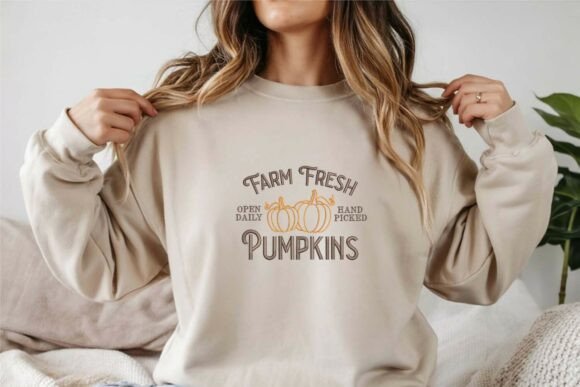
- Tea towel embroidery: A standout on natural cotton or linen tea towels. The design’s clean outlines hold up against textured weaves, and its moderate stitch density prevents stiffness—critical for kitchen linens buyers expect to be functional and beautiful.
- Embroidered patch: Translates cleanly into a sew-on or iron-on patch. Ideal for bundling (e.g., “Thanksgiving Trio” with cornucopia + turkey + pumpkin) or gifting in mini kraft boxes.
- Fabric pouch & pillow cover: Adds instant seasonal appeal without overwhelming small surfaces. At 3”–3.75”, it anchors the design while leaving room for coordinating fabrics or subtle quilting.
- Caps & market bags: Use with caution—curved surfaces and thick twill can distort fine details. Best reserved for larger hoop placements (if file supports it) or simplified versions you create yourself after testing.
What Makes It Sell—And What Requires Care
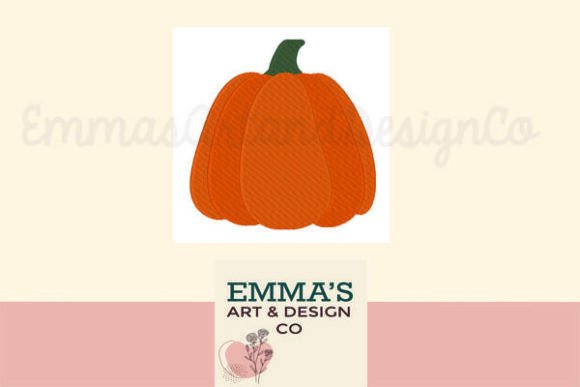
Pumpkin Machine Embroidery earns attention because it’s immediately legible, emotionally resonant, and production-friendly. In booth testing, customers paused longest at embroidered tea towels and aprons featuring this design—especially when paired with warm neutrals (cream, oat, terracotta) or deep autumn tones (burnt sienna, forest green).
That said, real-world production demands realism. Before stitching your first batch:
- Dense stitch areas? Review the file for tight fill sections—especially within the pumpkin stem or leaf veins. High stitch density can cause puckering on lightweight fabrics or stiffening on towels. Test on scrap with your exact thread colors and stabilizer.
- Tiny details? If the design includes fine vine tendrils, seed lines, or small text (“Give Thanks”), confirm readability at 3”. Those elements often blur on textured towels or dark fabric unless digitized with intentional spacing and reduced density.
- Dark fabric & contrast: Pumpkin designs risk disappearing on navy, charcoal, or black backgrounds. Always test thread contrast—navy thread on black fabric looks flat; mustard or burnt orange pops with intention.
- Hoop size & placement: Does the file fit comfortably in a 5x7” hoop? That’s your craft fair sweet spot—maximizing speed, minimizing rehooping, and keeping your workflow smooth during high-volume shows.
Design Assets That Lift Your Entire Booth
Pumpkin Machine Embroidery isn’t just a standalone motif—it’s a visual anchor for cohesive storytelling. When used across multiple handmade products (e.g., matching tea towel + apron + pouch), it builds brand consistency and signals quality craftsmanship. Shoppers subconsciously associate coordinated embroidery with intentional design—not random clip art. That perception lifts perceived value, supports higher price points, and encourages bundle purchases.
For Etsy sellers and digital shops, this machine embroidery design also strengthens your printable mockup library. A well-shot photo of the design on a cream linen tea towel, styled with dried wheat and a ceramic mug, converts far better than generic flat-lay renders. It tells a story before the buyer reads a word.
Practical Designer Notes You Can’t Skip
Before cutting fabric or listing on Etsy, run these checks:
- Test on scrap fabric—same weight, weave, and dye lot as your production run.
- Check thread contrast across at least three base colors (cream, oat, charcoal).
- Review spacing between elements—tight kerning or overlapping shapes won’t resolve cleanly on textured towels or curved caps.
- Confirm hoop size compatibility—don’t assume it fits your standard 5x7” unless verified.
- Inspect stitch density visually in your embroidery software—look for clusters >12,000 stitches in one zone.
- Use the right stabilizer: medium-weight cutaway for stable fabrics, tear-away for tea towels, and no-show mesh for lightweight linens.
- Create at least one real mockup—not digital, not printed, but stitched, washed, and pressed.
- Compare fabric colors side-by-side—dye lots vary, and pumpkin orange shifts dramatically on off-white vs. bright white.
- Confirm commercial licensing before selling finished products—this is non-negotiable for small shop product integrity and Etsy compliance.
Final Thought: This Is a Workhorse Design—Not Just a Seasonal Gimmick
Pumpkin Machine Embroidery stands out because it balances heart and hustle. It’s festive enough for Thanksgiving, refined enough for year-round farmhouse or cottagecore collections, and flexible enough to scale across your best-selling handmade products. In my experience, the designs that move fastest at craft fairs aren’t the flashiest—they’re the ones that feel thoughtful, trustworthy, and ready to love. This one does.
So stitch it boldly on your tea towels. Feature it cleanly on your aprons. Bundle it thoughtfully in your gift sets. And when a customer leans in, smiles, and says, “That’s exactly what I’ve been looking for”—you’ll know why.