Sea Shells Embroidery
A Designer’s First Look: Light, Airy, and Unexpectedly Versatile
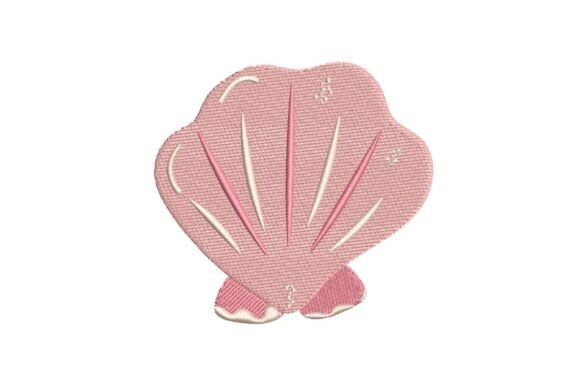
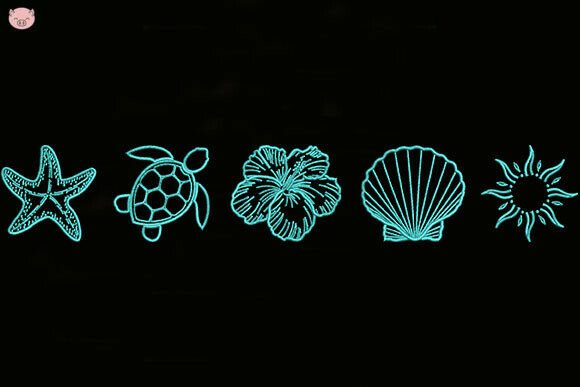
When I opened Sea Shells Embroidery, I wasn’t expecting the quiet confidence it carries. It doesn’t shout — it breathes. The layout feels organic, not rigid: three distinct shells arranged with gentle asymmetry, each shaped with subtle variation in curve and contour. There’s no heavy outlining or aggressive satin stitch borders — instead, soft fill stitches define form, and delicate running stitches trace natural ridges. As a designer who regularly selects embroidery files for client work, I immediately sensed its strength: it leans into texture rather than fighting it. This isn’t a design built for flash, but for presence — the kind that makes someone pause mid-scroll on Etsy or tilt their head while holding a baby onesie.
Real-World Test: A Linen Tea Towel for a Coastal Boutique
Last week, I stitched Sea Shells Embroidery onto a heavyweight natural linen tea towel — part of a small-batch collection for a seaside boutique. I used medium-weight cutaway stabilizer and 40-weight cotton thread in seafoam, sand, and pale coral. The result? Crisp, breathable detail without stiffness. The shells retained their airy silhouette even after laundering — no puckering, no distortion. Customers responded strongly to how “hand-finished” it felt, despite being machine embroidered. That’s the quiet power of this file: it bridges handmade charm and professional execution. It didn’t look like a stock design dropped onto fabric; it looked like it belonged there.
Where It Shines (and Where It Asks for Thought)
Sea Shells Embroidery excels on stable, medium-to-heavyweight fabrics: canvas tote bags, cotton sweatshirt fronts, linen pillow covers, and structured aprons. Its moderate stitch density keeps it flexible on apparel — no cracking on bent elbows or stretched necklines. As a machine embroidery design for custom apparel, it reads clearly at 3.5"–4.5", making it ideal for left-chest placements on tees or centered on kitchen towels.
It also works beautifully as an embroidered patch — especially when fused to twill or denim. For baby embroidery, I’d recommend it on burp cloths or crib bumper accents (always verifying safety standards first), where its gentle curves and open spacing avoid bulk. And yes — it’s a strong contender for holiday embroidery, particularly for coastal-themed gifts: think monogrammed beach towels or personalized nursery wall hangings.
But here’s where attention matters: on stretchy knits like jersey t-shirts, use tear-away + topping and reduce tension slightly. On dark fabric, test thread contrast carefully — light-colored shells can fade visually without enough tonal separation. Avoid placing it on highly textured surfaces like bouclé or thick terry cloth unless you’re willing to double-stabilize. And skip curved caps entirely — the shell shapes rely on flat, even tension to read correctly.
Design Integrity Meets Commercial Practicality
As an embroidery product reviewer who advises Etsy sellers and craft business owners, I pay close attention to how a design affects perceived value. Sea Shells Embroidery lifts the professionalism of any finished product. It doesn’t scream “digital file,” which builds customer trust — buyers assume more labor and care went into it. That perception translates directly to pricing confidence: you can charge $28 for a shell-embroidered tote instead of $22, and customers accept it because the detail feels intentional, not automated.
For digital product sellers, this file is a quietly smart addition to your catalog. It pairs naturally with ocean-themed bundles (think coordinating waves, starfish, or coral motifs) and performs well in printable mockups — its clean lines render sharply in both light and dark fabric previews. Just remember: before listing it as part of a commercial embroidery pack, confirm licensing terms. Not all embroidery files permit resale or bundling — always verify before uploading to your shop.
What Every Designer Should Test Before Stitching
- Run a scrap test — especially on your target fabric and stabilizer combo. Linen behaves differently than cotton poplin.
- Check thread color contrast on both light and dark backgrounds. A single thread shade may read perfectly on ivory but disappear on navy.
- Review stitch density — not too sparse (looks unfinished), not too dense (causes stiffness). This design strikes a balanced middle ground.
- Confirm hoop size compatibility. If your machine has a 4"x4" max, verify the largest version fits comfortably — don’t force a tight fit.
- Inspect fine details — like shell ridges or subtle tapering ends. Do they hold up at your intended size? Zoom in on the embroidery file preview.
- Test black-and-white mockups — helps assess visual weight and clarity without color distraction.
- Use proper stabilizer: cutaway for knits, tear-away for stable wovens, and lightweight fusible for lightweight fabrics like chambray.
- Verify commercial use rights before selling finished items or including it in design assets for clients.
Final Thought: A Design That Listens to the Fabric
Many embroidery files dominate the fabric. Sea Shells Embroidery collaborates with it. That’s rare — and valuable. Whether you’re stitching a personalized gift for a new parent, building a cohesive line of boutique merchandise, or sourcing reliable design assets for your craft business, this file delivers calm authority without overstatement. It doesn’t need embellishment. It doesn’t chase trends. It simply works — cleanly, thoughtfully, and repeatedly — across tote bag design, sweatshirt embroidery, baby embroidery, holiday embroidery, and more. If your goal is to make handmade products feel intentional, elevated, and quietly memorable, Sea Shells Embroidery is worth every stitch.