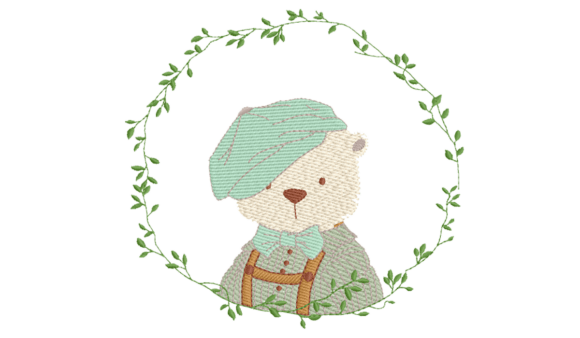
Vintage Bear with Cap Embroidery Design
First Impression: Friendly, Timeless, and Brand-Ready
As an embroidery designer who’s developed hundreds of commercial designs for small businesses, my first reaction to the Vintage Bear with Cap Embroidery Design is immediate: it reads as warm, approachable, and intentionally nostalgic—not just decorative, but brand-functional. The description—“a cute bear wearing a soft cap and suspenders, surrounded by a delicate leafy wreath”—signals thoughtful visual hierarchy: a clear central character, balanced supporting elements, and a cohesive vintage tone. It doesn’t scream “trend-chasing.” Instead, it feels like a quiet signature—ideal for businesses that value authenticity over flash: local cafés, indie florists, handmade toy shops, pet boutiques, or artisan bakeries building a story-driven identity.
Real-World Business Applications That Work
This design shines where personality meets practicality. As an embroidered patch, its compact composition holds up beautifully at 2.5"–3.5" sizes—perfect for attaching to aprons, tote bags, denim jackets, or staff caps. On custom apparel, it reads cleanly on left-chest placements (especially on light-to-medium-weight cotton or twill), adding charm without overwhelming the garment. For a boutique or Etsy seller, it serves double duty: as a subtle sleeve detail on organic-cotton tees and as a stitched label alternative on handmade product packaging—think linen tea towels, wooden toy boxes, or reusable produce bags.
It’s especially strong for businesses leaning into “handmade” positioning. A florist could embroider it onto canvas market totes; a pet brand might use it on bandanas or grooming aprons; a children’s studio could feature it on embroidered onesies or wall hangings—all while maintaining consistent brand recognition. Because the bear is centered and the wreath frames rather than crowds, the design scales well in printable mockups used for client presentations or online listings.
Where to Use It Thoughtfully
Like any well-intentioned machine embroidery design, the Vintage Bear with Cap Embroidery Design has sweet spots—and boundaries. Avoid shrinking it below 2" for patches or cap fronts: the suspenders’ detail and leafy wreath’s delicacy risk fill distortion or thread breakage, especially on curved surfaces like baseball caps or knit fabric. High stitch density in the wreath may require extra stabilizer on textured or loosely woven fabrics—think burlap totes or unbleached canvas aprons. On dark uniforms (navy, charcoal, black), test thread colors carefully: cream or oatmeal tones may lack contrast unless paired with a white underlay or outlined stitching.
Also note: while charming on baby clothes and nursery decor—as stated in the product description—that context prioritizes softness and safety over durability. For high-wash-frequency items (staff aprons, café towels), confirm the embroidery file includes optimized underlay and reduced jump stitches to prevent snagging or fraying over time.
Brand Identity Impact: More Than Just Cuteness
In small business merch, every stitch contributes to perception. The Vintage Bear with Cap Embroidery Design reinforces trust through familiarity—it evokes comfort, care, and craftsmanship without saying a word. That matters when customers choose between two local bakeries or pet supply shops: a well-executed embroidered bear on a staff apron signals attention to detail and pride in presentation. It elevates perceived product value, especially alongside handmade goods, because it visually communicates “this wasn’t mass-produced—it was chosen, tested, and stitched with intention.”
Consistency is key. When used across multiple touchpoints—caps, totes, packaging accents—the design becomes a quiet anchor in your visual language. Paired with clean typography and a restrained color palette, it supports cohesion without limiting versatility. It’s not so literal that it boxes you in (e.g., “bear = only for kids”), nor so abstract that it loses warmth. That balance makes it unusually flexible for cross-category branding—florists, studios, and cafés alike can own it authentically.
Practical Designer Notes Before You Stitch
Before committing to production, run these checks:
- Test in black and white first—verify readability of key features (cap brim, suspender straps, leaf shapes) without color distraction.
- Check small-patch viability—stitch out a 2.25" version on your target fabric to assess clarity and density.
- Review thread color contrast—especially for dark garments; consider a satin-stitch outline if edges blur.
- Inspect spacing and isolation—ensure no elements float too close to the edge or crowd each other at scale.
- Confirm hoop size compatibility—some wreath-based designs push standard 4x4 hoops; verify before digitizing adjustments.
- Test on real fabric + stabilizer combo—a lightweight tear-away may not support the wreath’s curves on stretchy knits.
- Create a client-ready printable mockup—show how it looks on an apron, tote, and cap side-by-side to align expectations.
- Compare beside existing design assets—does it harmonize with your logo, typography, and other embroidery files?
- Verify commercial licensing—since this is intended for small business merch and branded patch use, ensure the digital embroidery file permits resale and promotional distribution.
Remember: the strength of the Vintage Bear with Cap Embroidery Design isn’t just in its charm—it’s in how reliably it translates from screen to stitch to shelf. When treated as a strategic design asset—not just a cute motif—it becomes part of your brand’s tactile voice. For embroidery shops and small business owners alike, that’s where real value lives: in the quiet confidence of a well-chosen, well-executed machine embroidery design that earns attention, invites connection, and lasts beyond the first wash.