Cute Bunny with Baby Carriage Embroidery
A Practical Design Review for Small Business Merchandise & Branded Patches
As an embroidery designer who’s developed hundreds of commercial designs for small businesses—from indie boutiques and baby boutiques to cafés with nursery-themed gift lines—I approached Cute Bunny with Baby Carriage Embroidery with a very specific question: “Does this work as a functional brand asset—not just a decorative motif?” The answer is yes—but with thoughtful application.
First Impression: Playful, Warm, and Professionally Approachable
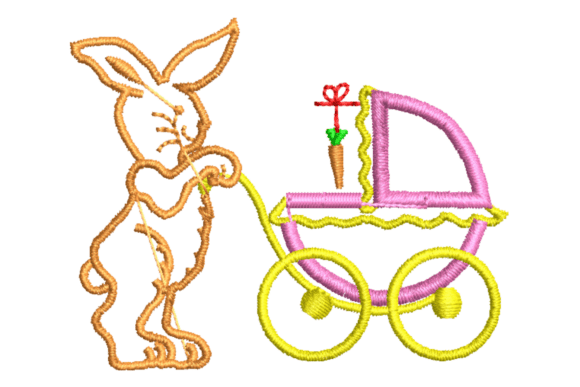
Right away, the title and description signal a design rooted in warmth and gentle storytelling. “Adorable embroidery design featuring a sweet bunny pushing a baby carriage” tells me this isn’t cartoonish or overly stylized—it leans into sincerity and soft charm. That’s ideal for brands that want to project care, authenticity, and handmade integrity. For small business merch, that tone translates directly into customer trust—especially in niches like baby boutiques, maternity studios, organic skincare lines, or florists offering newborn welcome bundles.
Real-World Business Applications: Where It Shines
Cute Bunny with Baby Carriage Embroidery performs exceptionally well across multiple branded touchpoints:
- Embroidered patches: Works beautifully as a sew-on or iron-on patch on tote bags, denim jackets, or boutique packaging. Its balanced composition (bunny + carriage) holds visual weight without overcrowding a 2.5"–3" patch size.
- Apron embroidery: A subtle chest placement (left side, 3–4" wide) adds personality without compromising professionalism—perfect for baby shower planners or nursery consultants.
- Cap embroidery: On structured front panels (6-panel caps), it reads clearly at 2.25" width—just keep the carriage handle and bunny ears unclipped by seam allowances.
- Tote bag design: Centered on natural cotton or canvas totes, it becomes an instant conversation starter and reinforces brand identity through repeated, friendly visibility.
- Staff uniforms & custom apparel: When placed on sleeve cuffs or pocket flaps, it adds cohesion to team wear—especially for businesses blending childcare services with retail (e.g., a play café with a shop section).
- Product packaging accents: As a small embroidered label on linen gift bags or muslin drawstring pouches, it elevates perceived value and signals attention to detail.
Where to Use It Carefully—And Why
This design has clear strengths, but smart embroidery decisions mean knowing its limits:
- Avoid ultra-small patch sizes (<2"): Fine details—like the carriage wheels or bunny’s whiskers—may lose definition. Always test at intended scale before bulk production.
- Curved surfaces (e.g., cap brims, rounded mugs with embroidered sleeves): The carriage base and bunny’s stance rely on stable horizontal alignment—so avoid stretching it over severe curves without digitizing adjustments.
- Dark or textured fabrics: Heavy slub cotton or corduroy can mute thread definition. Use high-contrast thread colors (e.g., ecru on navy, white on charcoal) and consider a lightweight cutaway stabilizer for clean stitch laydown.
- Frequent-wash items (baby onesies, staff aprons): Confirm the machine embroidery design uses moderate stitch density—not overly dense fill areas that may stiffen fabric or crack after repeated laundering.
Brand Identity Impact: More Than Just Cuteness
For small business owners, every embroidered element contributes to how customers perceive reliability, craftsmanship, and intentionality. Cute Bunny with Baby Carriage Embroidery supports a cohesive brand identity when used consistently—not as a one-off decoration, but as part of a visual language. Think of it alongside your logo, packaging typography, and social media tone: all warm, intentional, and gently refined.
It also strengthens buyer engagement. Etsy sellers report higher conversion on items with embroidered details that feel “designed,” not generic. Customers associate hand-finished touches with premium handmade product positioning—even if the item itself is mass-produced. That perceived value lifts pricing confidence and repeat purchase likelihood.
Practical Designer Notes Before You Stitch
Before committing to production, run these checks—especially if you’re sourcing the digital embroidery file from a marketplace or third-party designer:
- Test it in black and white first—does the silhouette hold up? Can you distinguish bunny from carriage without color cues?
- Check if it scales cleanly down to 2" wide. Zoom in on outlines—are they smooth, or jagged at small sizes?
- Review thread color suggestions: do they offer enough contrast for your target fabric? Avoid pastel-on-pastel combos unless intentionally soft.
- Inspect spacing between elements—the gap between bunny’s paws and carriage handle should stay legible at reduced sizes.
- Confirm hoop size compatibility. Most versions will fit standard 4x4 hoops, but verify before hooping time-sensitive orders.
- Test on your actual fabric—especially if using non-standard substrates like linen blends or recycled canvas.
- Use appropriate stabilizer: tear-away for stable wovens, cutaway for knits or stretchy nursery fabrics.
- Create a printable mockup for client approval—this avoids costly rework and builds trust early in the process.
- Compare it beside other design assets (logo, icons, patterns). Does it harmonize—or compete visually?
- Confirm commercial licensing applies. Since this is intended for small business merch, ensure your license covers resale, branded patches, and commercial embroidery use—not just personal projects.
Final Thought: A Versatile Asset in the Nursery & Embroidery Space
Cute Bunny with Baby Carriage Embroidery isn’t just another baby-themed motif—it’s a flexible, emotionally resonant design asset built for real business needs. Whether you’re launching a line of organic baby blankets, branding staff aprons for a pediatric wellness studio, or adding charm to reusable gift sets, it delivers warmth without sacrificing polish. Used thoughtfully—with attention to scale, fabric, and brand context—it becomes more than embroidery: it becomes part of your story.