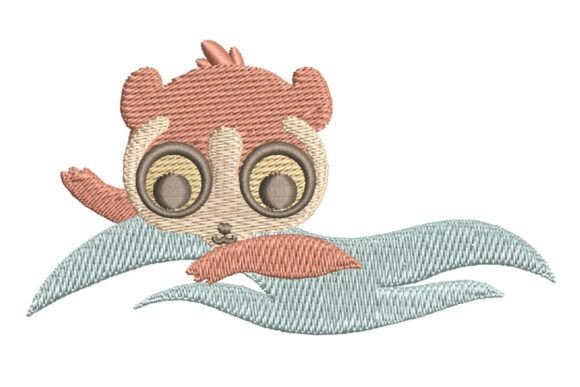
Cute Slow Loris Swimming Embroidery Design
First Impressions: Sweet, Playful, and Surprisingly Versatile
As an embroidery designer who’s tested hundreds of digital embroidery files for personalized gift shops, I’ll say it straight: the Cute Slow Loris Swimming Embroidery Design lands with quiet charm—not loud or trendy, but deeply memorable. Its mood is gentle playfulness, anchored by those unmistakable large eyes and a softly arched body mid-swim. It feels handmade, not mass-produced, thanks to the subtle texture in the loris’s fur—rendered in light brown and beige thread colors that suggest warmth and softness rather than sharp contrast. There’s no clutter, no unnecessary flourishes; just confident, intentional line work and thoughtful negative space. That makes it feel both modern and timeless—ideal for customers seeking something sweet without being saccharine, whimsical without tipping into cartoonish.
A Natural Fit for Meaningful Personalized Gifts
This design shines brightest when stitched onto items that carry emotional weight. Imagine it on a blanket embroidery for a newborn—its swimming pose subtly echoing the “first splash” of life, its calm expression soothing for nursery decor. On a linen pillow cover, it becomes a quiet centerpiece for a reading nook or guest room. For wedding gifts, stitch it onto a monogrammed cotton apron or a hand-embroidered kitchen towel: the loris’s gentle motion reads as joyful, unhurried, and full of presence—perfect for couples building a life together at their own pace. Even on a canvas tote bag, it transforms everyday utility into something tender and personal. And yes—it works beautifully for baby embroidery projects (think onesies, bibs, or burp cloths), especially when paired with minimalist fonts for names or birth dates. As a wedding gift or family keepsake, it invites storytelling—not just “what is this?” but “why does this feel like *us*?”
Where to Use It Thoughtfully
While versatile, the Cute Slow Loris Swimming Embroidery Design rewards intentionality. Avoid placing it on highly textured fabric—like terry cloth towels—without testing first; fine fur details may blur if pile interferes. Similarly, steer clear of curved surfaces (think mugs or rounded pillow inserts) unless you’re using specialized hoops and digitizing adjustments. On stretchy baby clothes, always use cutaway stabilizer and test tension—those delicate limbs and eye outlines need stability to hold shape after washing. Dark fabrics demand careful thread color selection: light brown and beige threads will recede unless paired with high-contrast underlay or white backing. And while the design reads clearly at 3–4 inches wide, avoid shrinking it below 2.5 inches—tiny eyes and subtle fur texture risk becoming indistinct. This isn’t a design for ultra-fine lettering or micro-details; its strength lies in its confident scale and expressive simplicity.
Why It Elevates Your Handmade Product—and Your Customer’s Experience
For Etsy sellers and small shop owners, the Cute Slow Loris Swimming Embroidery Design is quietly powerful. It boosts perceived value not through complexity, but through emotional resonance. Customers don’t just buy a stitched animal—they buy a feeling: calm, curiosity, tenderness. That translates directly to higher engagement in product photography (soft lighting + natural fabric backdrops make it glow), stronger buyer trust (“this feels special, not generic”), and increased likelihood of repeat orders or word-of-mouth referrals. Because it avoids seasonal clichés, it performs year-round—no need to rotate inventory for holidays. And in the Vacation category? It’s unexpectedly fitting: imagine it on a beach towel or travel pouch—not literal, but evocative of slow, joyful movement, of pausing to notice small wonders. That kind of layered meaning makes it a standout small shop product.
Practical Embroidery Notes You Can’t Skip
Before stitching your first customer order, treat the Cute Slow Loris Swimming Embroidery Design like any high-stakes machine embroidery design:
- Always test on scrap fabric—especially if using it on towels, baby knits, or dark linens.
- Check thread color contrast between light brown, beige, and your base fabric. A printable mockup helps visualize balance before hooping.
- Confirm hoop size compatibility. Does the design fit comfortably within your standard hoop? If it pushes boundaries, consider repositioning or resizing proportionally.
- Review stitch density. Overly dense fills can cause puckering on lightweight fabrics—look for smooth transitions in the fur texture, not heavy buildup.
- Use appropriate stabilizer: medium-weight cutaway for knits, tear-away for stable wovens, and water-soluble + tear-away combo for towels.
- Compare light and dark fabric mockups. What reads softly on ivory may vanish on charcoal—adjust underlay or add outline stitches if needed.
- Inspect small details post-stitch: Are the eyes crisp? Does the fur texture read as intentional, not fuzzy?
- Verify commercial licensing before selling finished products. As a digital embroidery file, its use rights affect your entire product line—don’t assume.
Final Thought: More Than a Design—A Quiet Invitation
The Cute Slow Loris Swimming Embroidery Design doesn’t shout. It leans in. That’s why it works so well for personalized gift businesses—from baby product creators wrapping heirloom blankets to wedding gift designers stitching love into linen aprons. It meets customers where they are: seeking authenticity, warmth, and meaning in handmade quality. When executed well—with care for fabric, stabilizer, and thread—it becomes more than decoration. It becomes a quiet invitation to slow down, look closer, and remember what matters. For embroidery makers and small business owners alike, that’s not just good design—it’s good business.