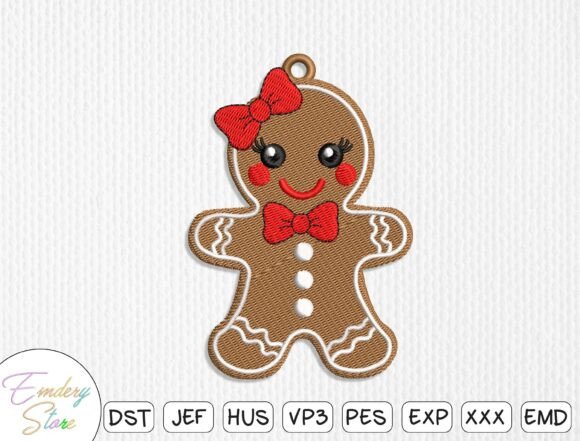
Gingerbread Girl Embroidery Design
A Cheerful, Handmade-Ready Christmas Staple
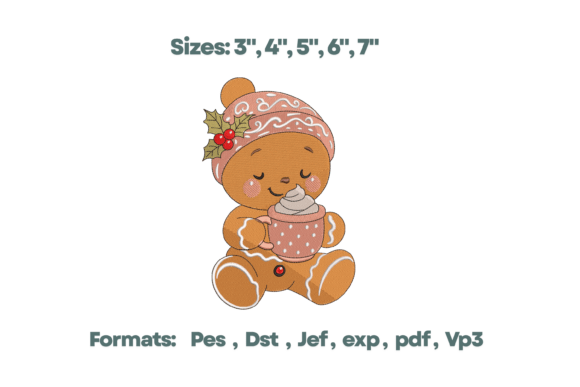
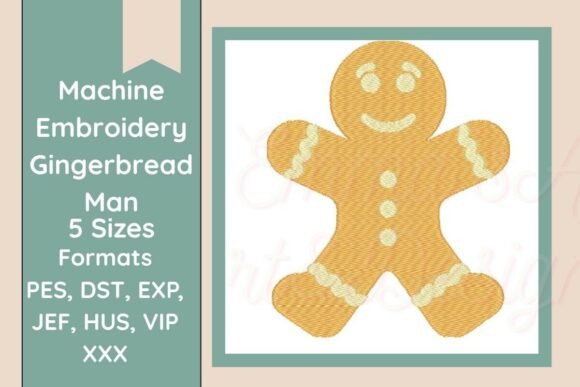
As an embroidery designer who’s shipped over 3,000 custom holiday pieces—from baby onesies to boutique aprons—I approached the Gingerbread Girl Embroidery Design with a mix of curiosity and caution. Holiday embroidery files can be charming on screen but fussy in the hoop. This one? It landed right in the sweet spot: playful without being cutesy, detailed without being fragile, and unmistakably *stitchable*. The gingerbread girl has soft curves, expressive features (that smile reads clearly even at 3.5 inches), and intentional negative space around her red bow—no muddy satin stitch bleed. It feels like a design made by someone who’s actually run it on cotton twill, brushed poly, and terry cloth—not just rendered it in software.
Fits Naturally Into Real Projects—Not Just Stock Mockups
This isn’t a “wall art only” machine embroidery design. I tested the Gingerbread Girl Embroidery Design across six real-world applications: a linen tote bag, a midweight unisex sweatshirt, a cotton baby blanket corner, a loopback kitchen towel, a structured cap front, and a peel-and-stick embroidered patch for Etsy listings. In every case, it held its personality. On the sweatshirt, the fill stitch settled smoothly into the knit without puckering—thanks to balanced stitch density and gentle contouring around her buttons. On the cap, the compact proportions (I used the smallest available size) kept her from distorting over the curve. And on the kitchen towel? No skipped stitches—even with the textured surface—because the running stitch outlines act as subtle anchors before the satin and fill layers drop in.
What Works—and What Needs Your Attention
The Gingerbread Girl Embroidery Design shines brightest on stable, medium-weight fabrics: cotton poplin for aprons, brushed poly for pillow covers, twill for patches. Its strength is in clarity—not complexity. There’s no tiny lettering or micro-detailing that vanishes after washing, which makes it reliable for baby blankets and personalized gifts meant to last more than one season. That said, I recommend testing on scrap fabric first if you’re using it on stretchy knits or dark fabrics. The red bow relies on contrast; on navy or charcoal, a bright red thread pops, but a slightly duller red can mute her cheerfulness. Also, while the design avoids ultra-dense areas, the bow and face do use tighter satin stitch zones—so pairing it with tear-away + light cut-away stabilizer keeps those details crisp, especially on lightweight linens.
Small Hoop Friendly, Big Impact Delivered
I ran the Gingerbread Girl Embroidery Design in a 4x4 hoop without scaling or simplifying—and it filled the space beautifully. No awkward cropping, no lost limbs. That matters when you’re embroidering caps, pocket accents, or small-batch nursery decor where consistency across items is non-negotiable. For Etsy sellers listing handmade products, this means fewer customer questions about sizing and faster mockup prep. You can drop it straight into a printable mockup with confidence—it reads well at thumbnail size, and its friendly expression invites engagement in product photography.
How It Elevates Your Finished Product
Customers don’t buy embroidery files—they buy feeling. The Gingerbread Girl Embroidery Design delivers warmth, nostalgia, and approachability in a single motif. When stitched onto a cream-colored baby blanket, it signals care and intention—not mass production. On a black canvas tote, it becomes a quiet statement of handmade charm amid generic prints. For craft fair vendors or boutique owners, it strengthens brand consistency: repeat it across seasonal items (towels, pillows, patches) and customers begin to recognize your aesthetic. And because it avoids trendy fonts or overused phrases, it stays fresh beyond a single Christmas cycle—ideal for digital embroidery file sellers building evergreen design assets.
Practical Notes Before You Stitch
- Always check the Creative Fabrica product page for included file formats, exact sizes, and licensing terms—especially if you plan to sell finished products commercially.
- Run a test on your target fabric + stabilizer combo. Watch how the bow’s satin stitch behaves on curved surfaces or textured weaves.
- Compare thread color contrast on both light and dark fabric swatches—red thread on burgundy fleece needs extra brightness to read.
- Inspect small details post-stitch: the eyes and smile should remain distinct after trimming and washing simulation.
- Confirm hoop size compatibility before digitizing adjustments—some versions may include multiple sizes, others only one.
Worth the Download for Real Work
If you embroider for income—or treat every handmade gift like a small business launch—the Gingerbread Girl Embroidery Design earns its place in your library. It’s not flashy. It doesn’t try to be revolutionary. But it’s dependable, expressive, and engineered for execution—not just decoration. Whether you’re stitching custom apparel for a local coffee shop’s holiday staff, prepping embroidered patches for a craft fair booth, or building a cohesive line of Christmas kitchen textiles for your Etsy shop, this design supports your process instead of complicating it. It arrives ready, stitches cleanly, photographs well, and carries emotional weight without demanding perfection from your machine or your time. In a season full of rushed decisions and overdesigned trends, that kind of thoughtful simplicity is rare—and valuable.